> ## Documentation Index
> Fetch the complete documentation index at: https://docs.galileo.ai/llms.txt
> Use this file to discover all available pages before exploring further.
# Where Do I Find My Project Keys?
## Where can I find my project keys in the Galileo application?
When using Galileo there are three different types of keys that you may use.
1. Galileo API Key (`GALILEO_API_KEY`)
2. Galileo Project ID (`GALILEO_PROJECT`)
3. Galileo Log stream (`GALILEO_LOG_STREAM`)
These keys help to connect your application to Galileo's services.
Let's break down what each key does and where to find it within the UI.
### Galileo API key
You will need your Galileo API key to be able to send traces to a Log stream fro your applications or run experiments in code.
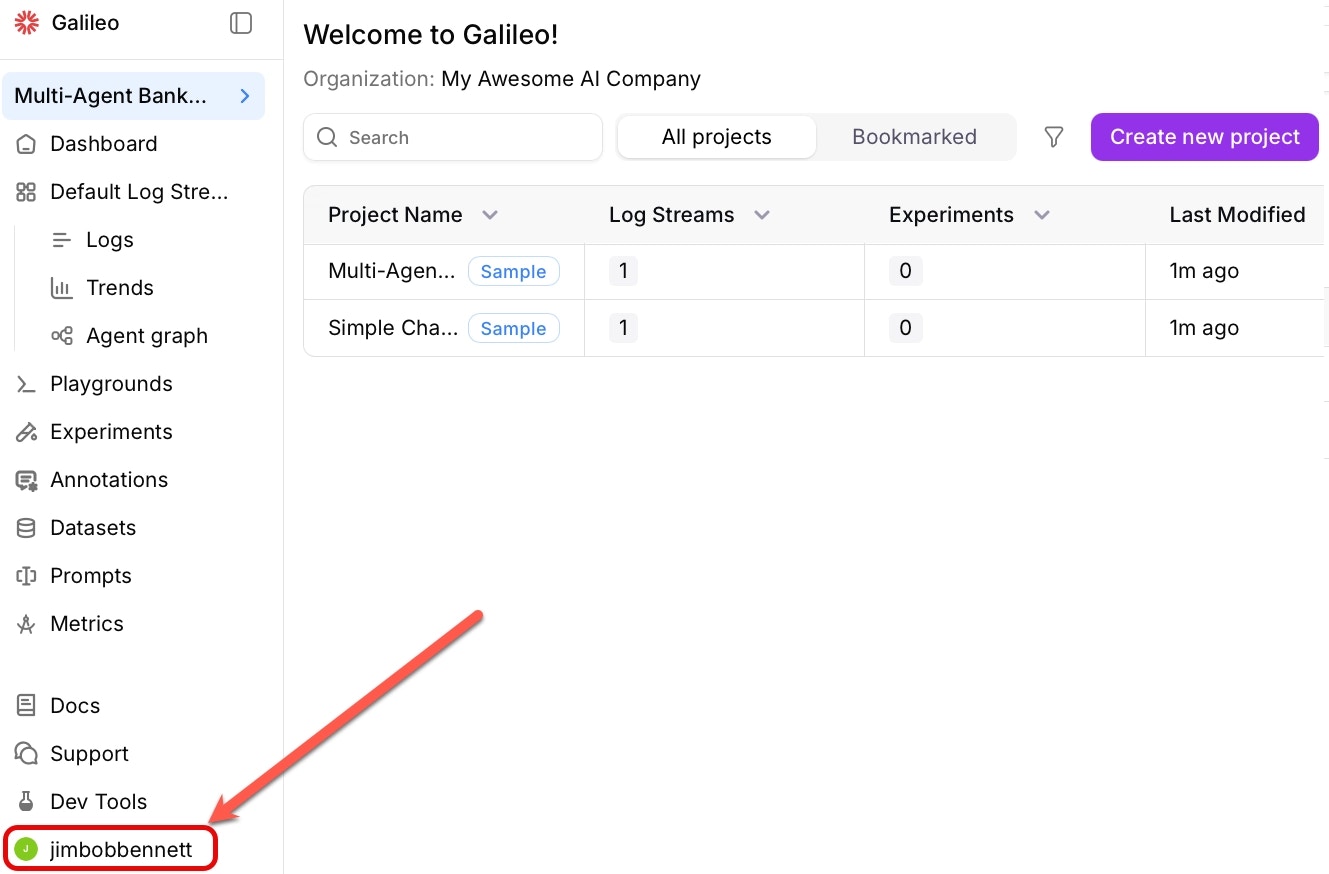
Select the user menu in the bottom left.
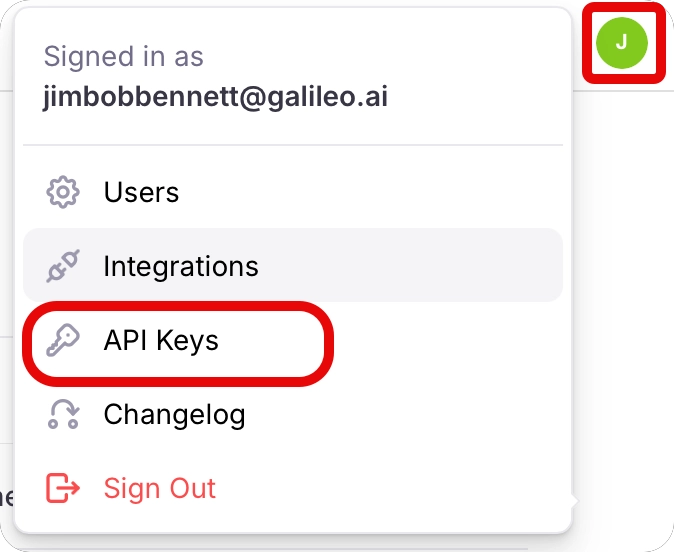
 Select **API Keys** from the user menu.
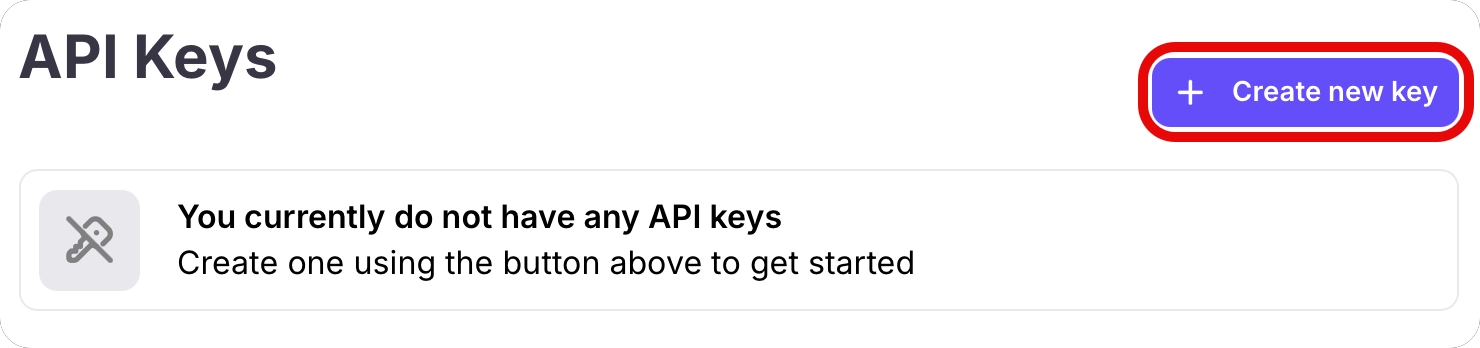
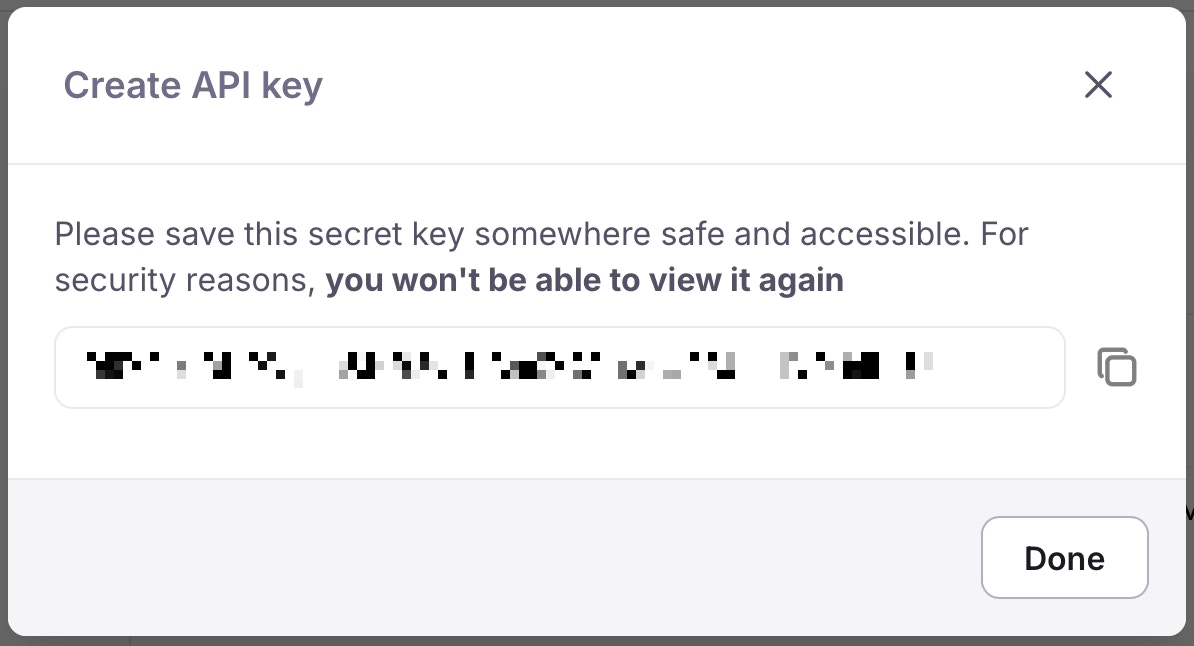
 Select the **+Create new key** button to create a new API key.
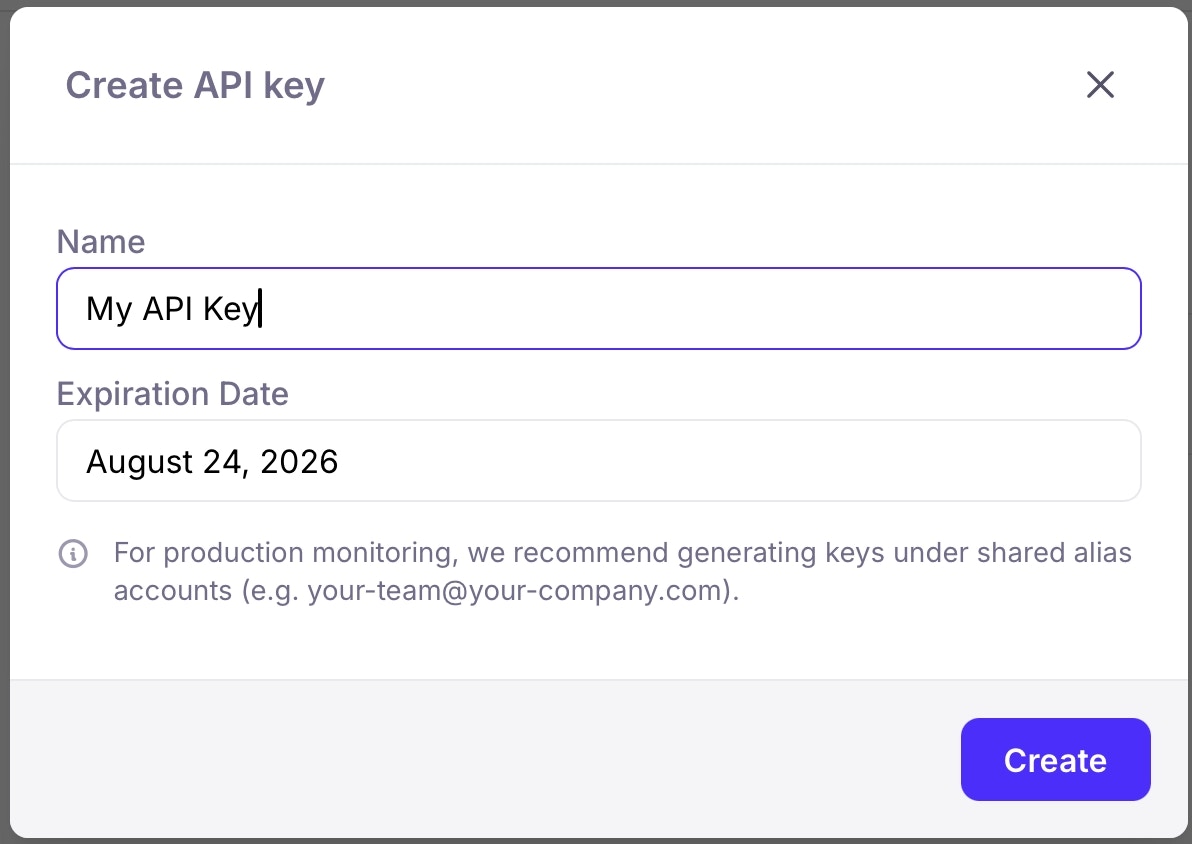
 Give your API key a name, and optionally set an expiry date. By default API keys expire after a year.
 Copy your API key and store it somewhere safe. You will not be able to see this key again.
 ### Where do I find my Galileo project ID?
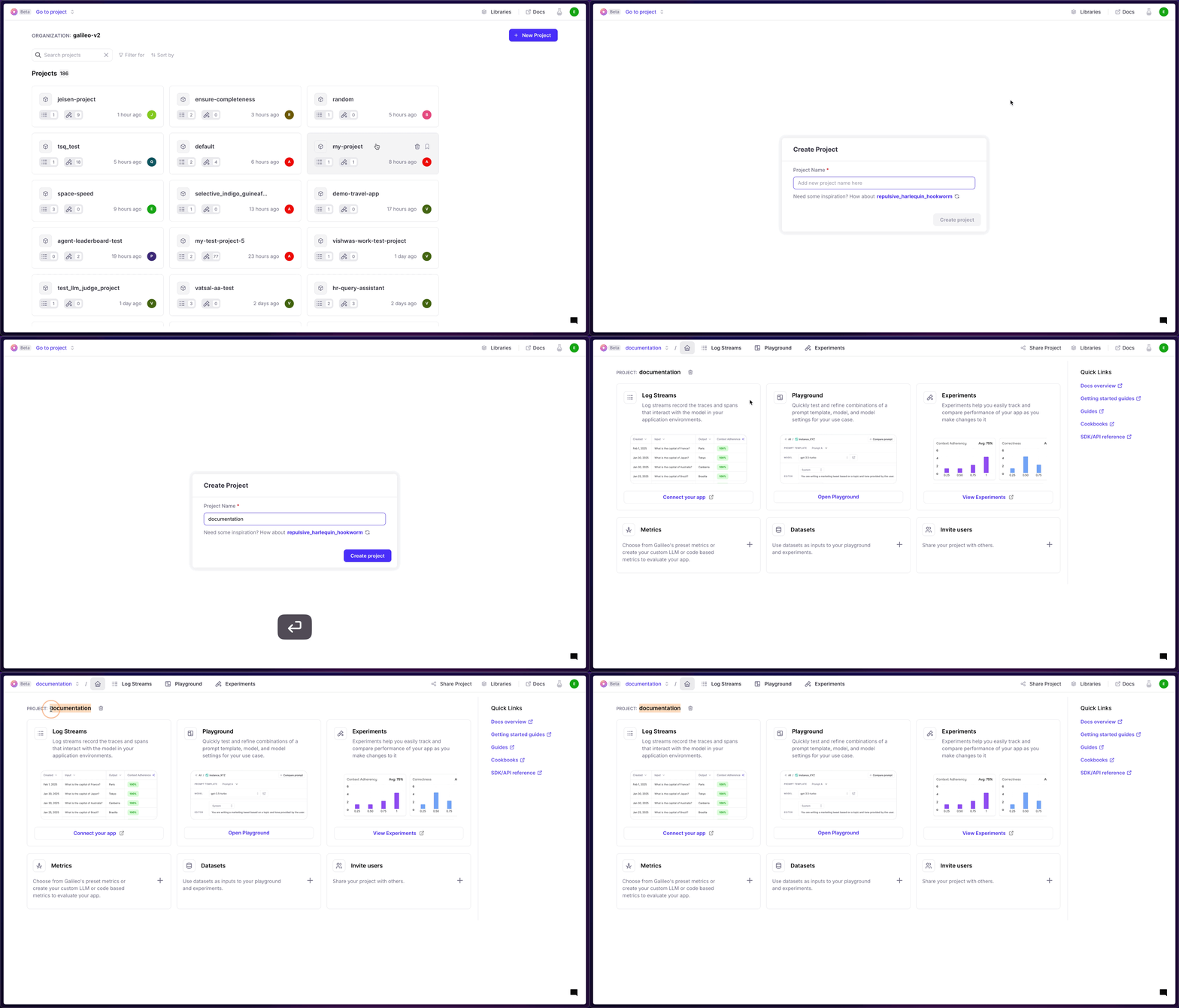
Your Galileo Project ID is the name of the project you create.
### Where do I find my Galileo project ID?
Your Galileo Project ID is the name of the project you create.
 ### Where do I find my Galileo Log stream?
The Galileo Log stream identity is the name of the specific Log stream that you are looking to record your logs in.
To create a Log stream, first select the project you'd want to create a Log stream from.
Then, select `Connect your app` from the project home screen.
### Where do I find my Galileo Log stream?
The Galileo Log stream identity is the name of the specific Log stream that you are looking to record your logs in.
To create a Log stream, first select the project you'd want to create a Log stream from.
Then, select `Connect your app` from the project home screen.
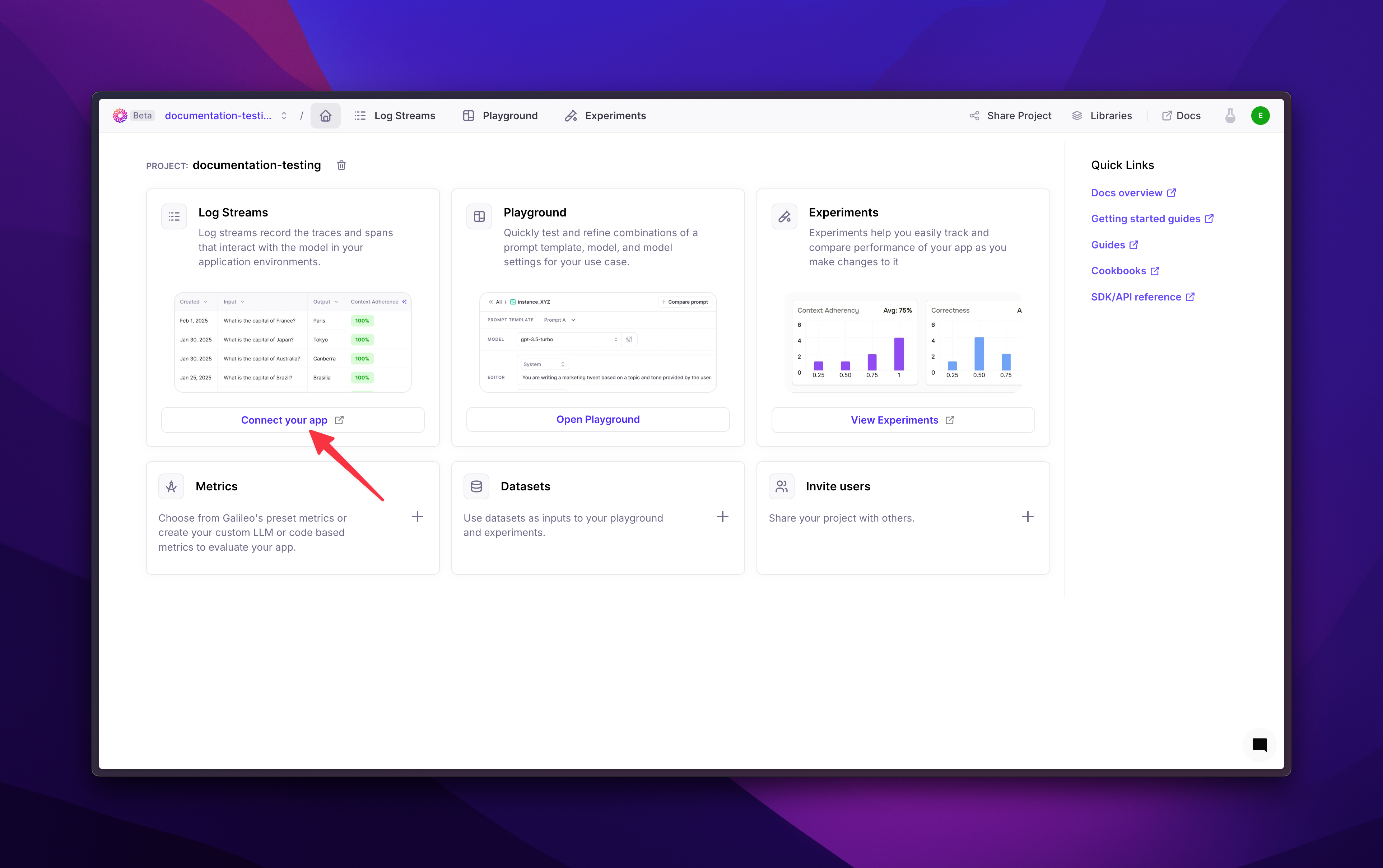 Once you've selected the `Connect your app` button, you'll see a modal pop up, select `Create Log stream`
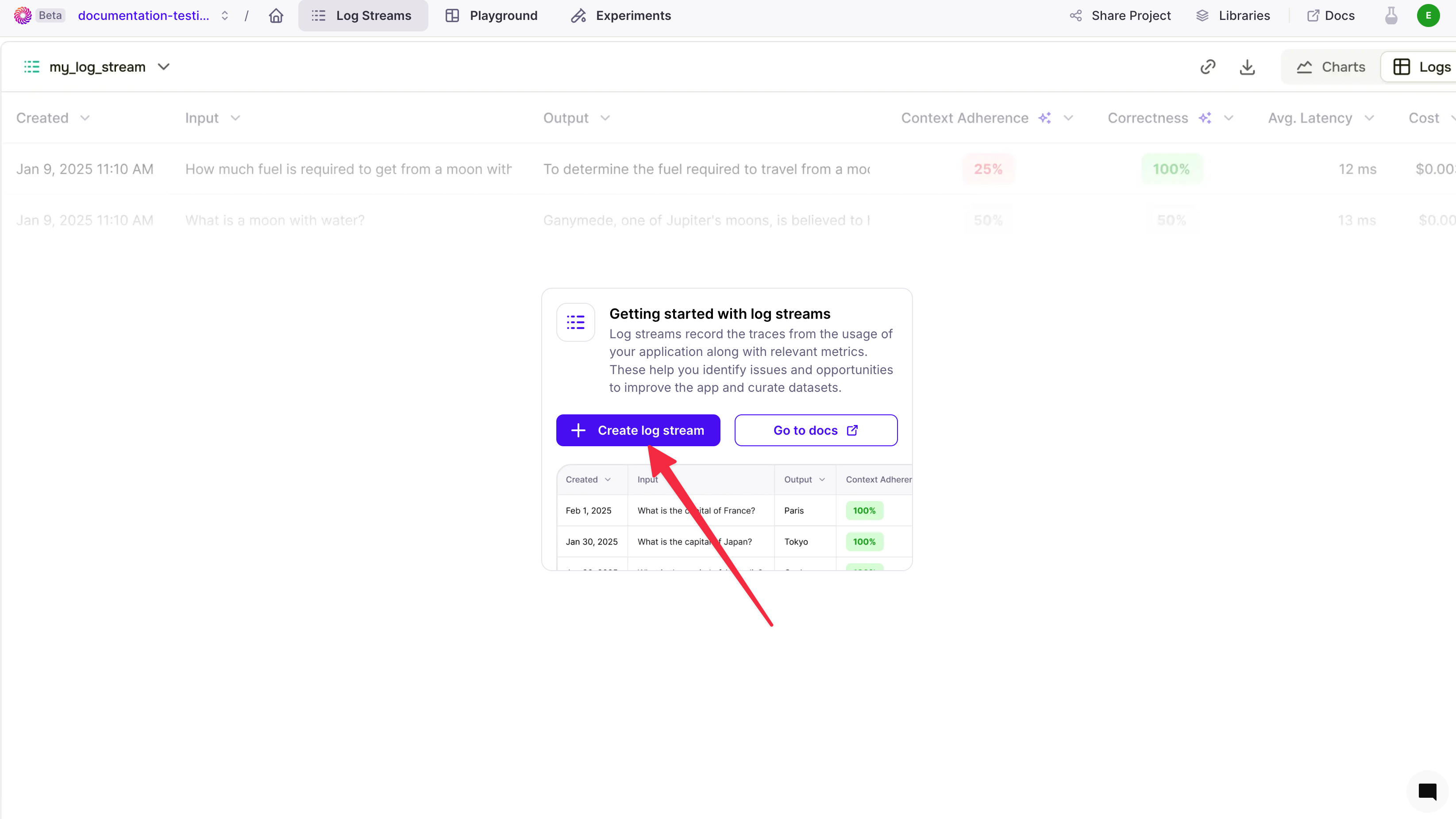 .
Galileo will create a default Log stream with the key `my_log_stream` please be aware that this key is case-sensitive.
You can create additional Log streams for the same project by navigating to the left-hand side of the screen, toggling down and selecting the `Create Log stream` button.
.
Galileo will create a default Log stream with the key `my_log_stream` please be aware that this key is case-sensitive.
You can create additional Log streams for the same project by navigating to the left-hand side of the screen, toggling down and selecting the `Create Log stream` button.
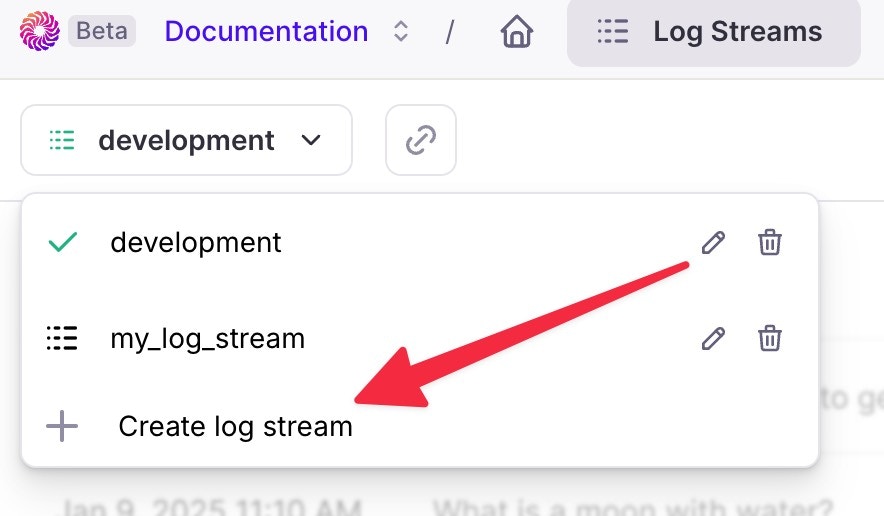 Its from within this dropdown menu that you can also edit or delete Log streams. Keep in mind that the keys are case-sensitive, so if you change the name of the Log stream, you will also have to change how it is referenced within your application as well.
## Best practices and tips
* Keep your API keys secure and never share them publicly
* Create separate keys for different applications or environments
* Set expiration dates for temporary access
* Regularly rotate keys for enhanced security
* Use descriptive names to track key usage
Its from within this dropdown menu that you can also edit or delete Log streams. Keep in mind that the keys are case-sensitive, so if you change the name of the Log stream, you will also have to change how it is referenced within your application as well.
## Best practices and tips
* Keep your API keys secure and never share them publicly
* Create separate keys for different applications or environments
* Set expiration dates for temporary access
* Regularly rotate keys for enhanced security
* Use descriptive names to track key usage