

The test set is the ground truth for the run. After training, Luna Studio scores the resulting metric against this dataset and reports F1, AUC-ROC, and other result metrics on the Run details page.Documentation Index
Fetch the complete documentation index at: https://docs.galileo.ai/llms.txt
Use this file to discover all available pages before exploring further.
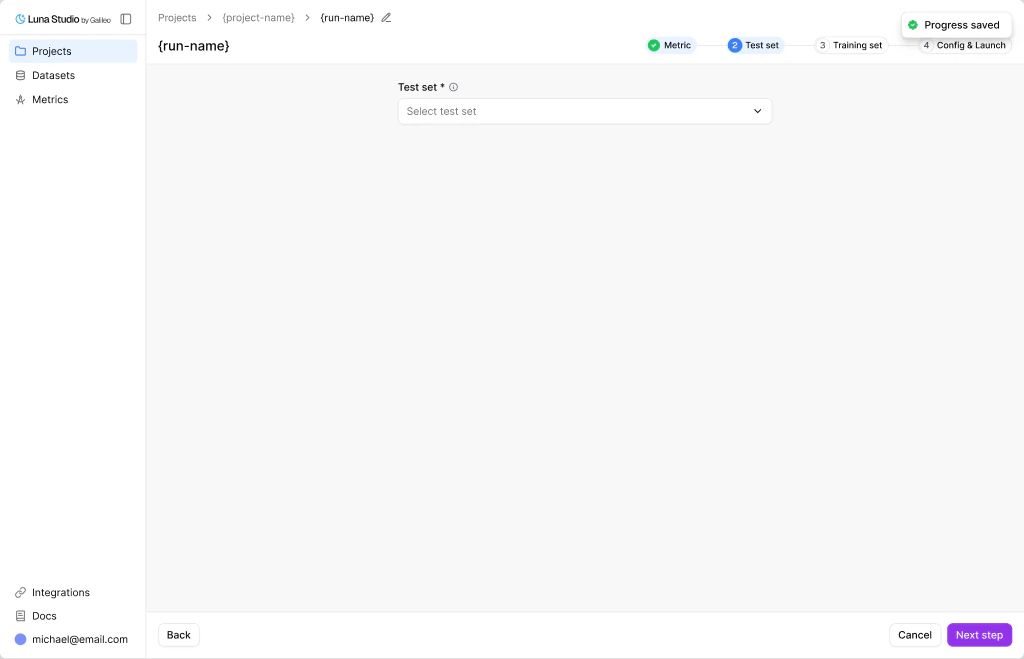
Pick an existing test set
The Test set select shows test sets you’ve already added to this org. Each option includes a row count and source label, e.g.rag-eval-dataset-v2 — 320 rows · Uploaded.
Type into the select to filter by name.
Add a new test set
If you don’t have one yet, click the dropdown’s Add new test set action. The Add test set modal opens.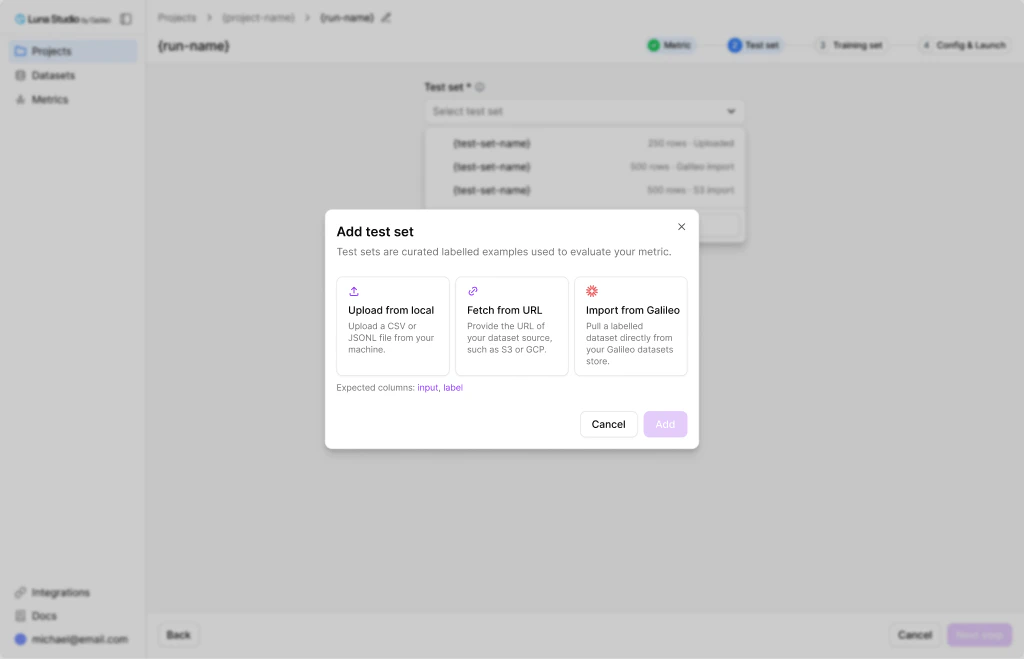
Upload from local
Drag-and-drop a
.csv or .jsonl file.Fetch from URL
Paste an
http://, https://, s3://, or gs:// URL.Import from Galileo
Browse datasets in your connected Galileo workspace.
Importing from Galileo requires an active Galileo integration. If one isn’t configured, Luna Studio prompts you to add it inline before the import panel appears.
Validation
Luna Studio runs validation on the test set to ensure it meets the required schema / format / content rules. If there are any validation errors, they will be highlighted (See example below).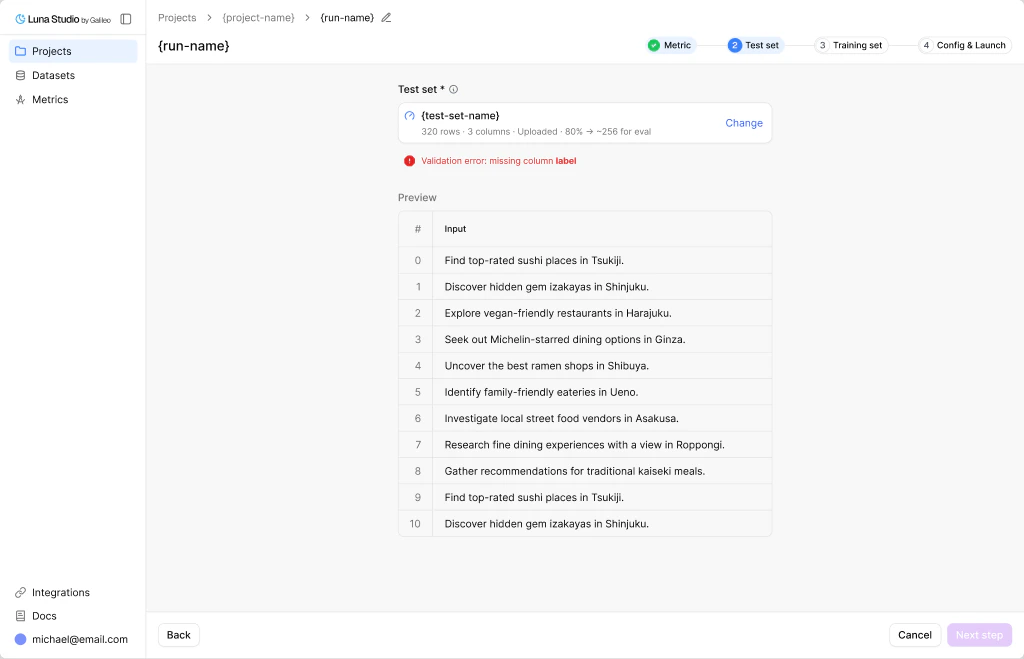
Dataset preview
If validation completes, you should see a preview of the test set rows. The preview is paginated so you can inspect rows without leaving the run creation flow.Where to go next
Step 3 — Training set
Generate from the test set, or upload your own.
Add a dataset
Reference for all three dataset sources.